
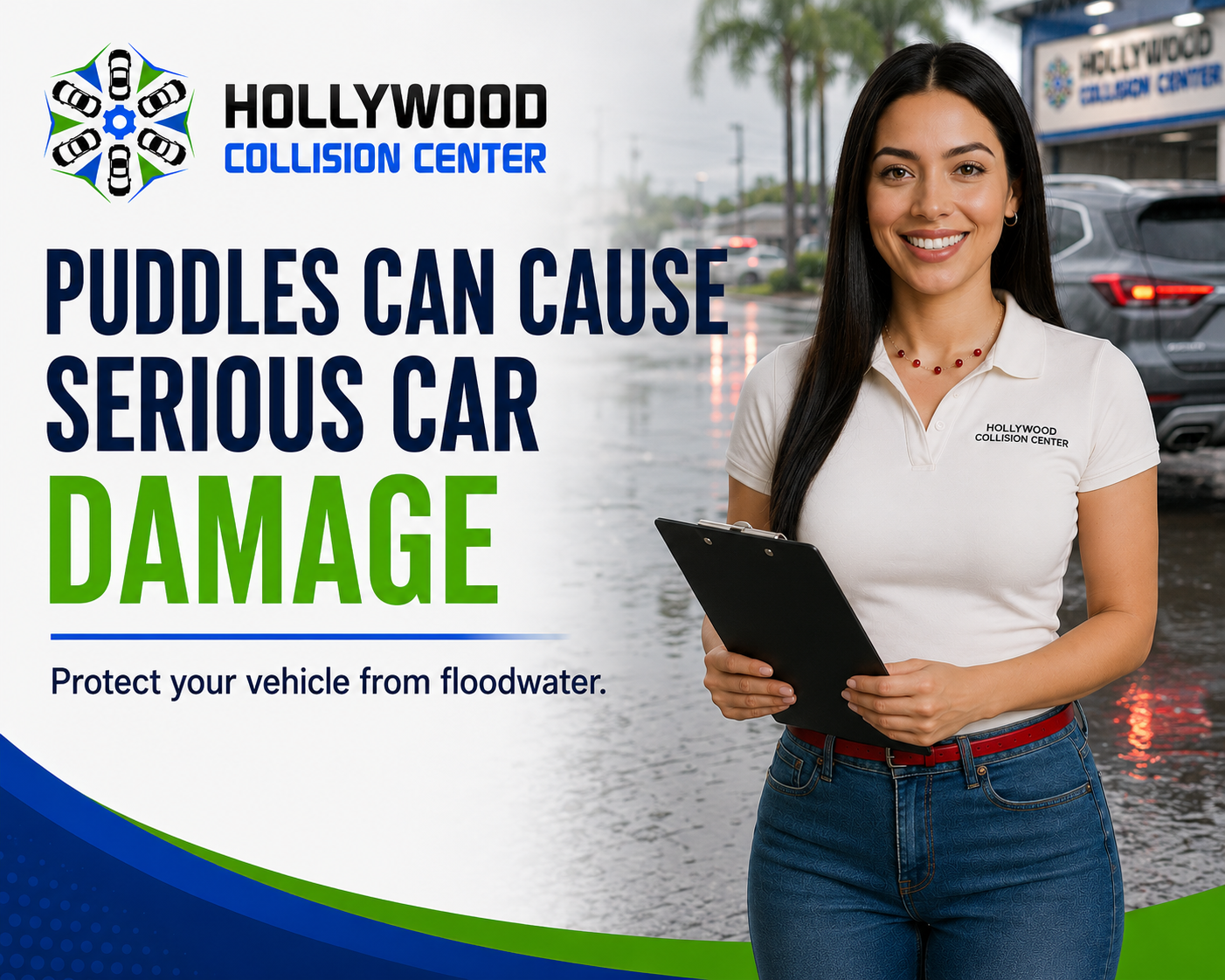
South Florida rain can turn a familiar road into a flooded one within minutes. In Hollywood, Pembroke Pines, Miramar, Davie, Fort Lauderdale and nearby communities, a puddle that looks harmless may be much deeper than it appears—or may conceal a pothole, debris or damaged pavement beneath the surface.
Driving through standing water does more than put your safety at risk. It can allow water to enter the engine, contaminate important fluids, damage electrical systems and soak the materials beneath your vehicle’s carpet. Some problems appear immediately, while corrosion, mold and electrical failures may not become obvious until days or weeks later.
Knowing when to turn around—and what to do if your car has already been exposed—can help protect both you and your vehicle.
When Does a Puddle Become Dangerous?
It is nearly impossible to judge the depth or condition of floodwater from inside your vehicle, especially during heavy rain or at night. Even if another driver makes it through, that does not mean the route is safe for your car.
The [National Weather Service](https://www.weather.gov/safety/flood-turn-around-dont-drown) warns that 12 inches of rushing water can carry away most cars, while two feet can carry away SUVs and trucks. Floodwater can also hide a washed-out roadway, sharp debris, downed electrical lines or a sudden drop in pavement.
If a street is covered by water, the safest decision is simple: turn around and take another route. Never drive around a barricade, and do not assume that a truck, SUV or all-wheel-drive vehicle is protected from floodwater. Ground clearance does not eliminate the risk of losing traction, stalling or being swept away.
How Puddles and Floodwater Can Damage Your Car
Engine Damage and Hydrolock
Your engine is designed to compress air—not water. If water is pulled through the air intake and into the cylinders, the engine may hydrolock. This can bend connecting rods, damage pistons and cause severe internal engine failure.
If your vehicle stalls after entering deep water, do not attempt to restart it. Trying to start the engine again can pull in more water and make the damage considerably worse.
Electrical and Computer Failures
Modern vehicles rely on computer modules, wiring harnesses, sensors, cameras and electronic safety systems. Water inside connectors or modules can cause warning lights, battery drain, no-start conditions and features that work only intermittently.
These problems may not appear immediately. Electrical connections can continue corroding after the visible moisture has dried, creating failures days or even weeks later.
Transmission and Drivetrain Contamination
Floodwater can enter the transmission, differential and other drivetrain components. When water mixes with lubricants, those fluids may no longer protect internal parts properly. If contamination is not identified and corrected, premature wear or major mechanical failure can follow.
Brake and Undercarriage Damage
Standing water may contain salt, sand, dirt, sewage and other contaminants. These materials can collect around brake components, suspension parts, body seams, the exhaust system and the vehicle’s undercarriage.
Without a thorough inspection and cleaning, hidden rust and corrosion may continue to develop long after the storm has passed.
Interior Water Damage, Mold and Odors
Water that reaches the cabin can soak much more than the visible carpet. Carpet padding, insulation, seat foam, wiring channels and areas beneath interior trim can hold moisture even after the surface feels dry.
South Florida’s heat and humidity create ideal conditions for mold, mildew and persistent odors. Simply vacuuming the water or leaving the windows open is rarely enough to dry every concealed area properly.
How to Protect Your Vehicle During Heavy South Florida Rain
The best way to protect your car from flood damage is to avoid standing water altogether. If you cannot clearly see the pavement beneath the water, do not enter it. Take another route, wait for conditions to improve or move to higher ground if local officials instruct you to do so.
For ordinary, shallow roadway puddles that are clearly not flooding, reduce your speed before reaching the water. Keep the steering wheel steady and avoid sudden braking or sharp turns. Hitting pooled water too quickly can cause hydroplaning and send a forceful splash into vulnerable areas beneath the vehicle.
Proper tire pressure and adequate tread are also important. Healthy tires help move water away from the road surface, while worn or improperly inflated tires increase the risk of losing traction.
During heavy rain, increase your following distance and avoid driving beside large trucks when possible. Their spray can reduce visibility, and additional space gives you more time to react to standing water ahead.
When a tropical storm, hurricane or extended period of heavy rain is expected, move your vehicle away from low-lying streets, drainage canals and areas that regularly collect water. If possible, choose elevated parking before conditions deteriorate.
What to Do If Your Car Stalls or Takes on Water
Your next steps can affect both your safety and the extent of the damage.
Put personal safety first. If water is rising or moving around the vehicle, follow emergency instructions and call 911 if you are in danger. Do not restart the engine. If the vehicle stalled in water, leave it off. Restarting it may worsen internal engine damage. Have the vehicle towed. A car may appear drivable while water remains inside the engine, transmission, wiring or safety systems. Document what happened. When it is safe, photograph the water level, exterior, interior and any visible damage. Record where and when the exposure occurred. Contact your insurance company. Coverage depends on your individual policy, deductible and exclusions. Report the loss promptly and save your claim information. Arrange a professional inspection as quickly as possible. Fast water extraction and drying can help limit mold and corrosion, but the vehicle also needs mechanical, electrical and safety-system diagnostics.
Even if your car did not stall, it should be inspected if water entered the cabin, reached the lower doors or caused warning lights, unusual noises, braking changes or a musty smell.
How Hollywood Collision Center Repairs Flood-Damaged Vehicles
Flood-damaged vehicle repair requires much more than removing the water and cleaning the carpet. At Hollywood Collision Center, our technicians evaluate the full extent of the damage and determine whether the vehicle can be safely restored.
Our flood and water damage repair process may include:
Complete Diagnostic and Damage Assessment
We inspect the vehicle for visible and hidden water intrusion, including the engine, drivetrain, electrical systems, interior, undercarriage and body cavities. This comprehensive assessment helps us develop an appropriate repair plan and determine whether restoration is a safe, practical option.
Professional Water Extraction and Industrial Drying
Water is removed from the cabin, carpet, trunk, headliner and concealed areas. Industrial drying and dehumidification address moisture that towels, fans and household vacuums may leave behind.
Mold and Mildew Prevention
Affected areas are treated to help prevent mold, mildew and persistent odors. Carpeting, upholstery, trim, padding or headliner materials may be deep-cleaned or replaced when necessary.
Electrical Testing and Repair
Our technicians perform diagnostic scans and inspect modules, sensors, connectors and wiring harnesses for water exposure and corrosion. Damaged components are repaired or replaced, followed by computer scans to confirm that the vehicle’s systems are communicating properly.
Engine, Transmission and Mechanical Inspection
The engine and drivetrain are checked for water intrusion, hydrolock, contaminated fluids and sensor damage. The transmission fluid, brakes and HVAC system may also require inspection, cleaning or service depending on the level of exposure.
Corrosion Protection and Body Restoration
The undercarriage, frame areas and body cavities are evaluated for developing rust and corrosion. Rust-inhibiting treatments, exterior repairs, refinishing or additional bodywork can be completed when needed.
Insurance Claim Assistance and Final Quality Check
Hollywood Collision Center can work directly with your insurance carrier to help document the damage and coordinate the claim. Before a repaired vehicle is released, it receives final diagnostic scans and a complete quality inspection. Courtesy towing and loaner vehicle coordination are also available.
Signs Your Vehicle May Have Hidden Water Damage
Contact a professional if you notice any of these warning signs after driving through deep water or finding your vehicle in a flooded area:
Damp carpeting or moisture in the trunk or spare-tire compartment A musty smell, fogged windows or recurring condensation New warning lights or electrical features that work intermittently Difficulty starting, rough running or unusual engine sounds Delayed shifting or fluid that appears cloudy or milky Reduced braking performance, grinding or pulling while braking Rust or discoloration around seat tracks, bolts, connectors or interior trim
Water damage can continue spreading even when the car seems normal. The sooner it is inspected, the better the chance of identifying problems before corrosion, mold or electrical failures become more extensive.
Can a Flood-Damaged Car Be Repaired?
Sometimes—but the answer depends on the depth and type of water, how long the vehicle was exposed, which systems were affected and how quickly professional treatment begins.
A vehicle with limited water intrusion may be repairable, while one that was deeply submerged or exposed for an extended period may not be safe or economical to restore. The only responsible answer comes from a detailed inspection.
Hollywood Collision Center does not rely on guesswork. We evaluate the damage, explain our findings and help you understand the available options before repairs move forward.
Flood-Damaged Vehicle Repair in Hollywood, FL
If your vehicle was caught in a deep puddle, stalled on a flooded road or took on water while parked, do not wait for odors, rust or warning lights to appear.
Hollywood Collision Center provides professional flood and water damage inspections and repairs for drivers throughout Hollywood, Pembroke Pines, Miramar, Davie, Fort Lauderdale, Hallandale Beach, Cooper City, North Miami, Aventura and surrounding South Florida communities.
Call (954) 616-8540, text (954) 624-6842, or request an inspection for your flood-damaged vehicle. If the vehicle is not safe to drive, we can help coordinate towing to our shop at 6030 Cleveland St, Hollywood, FL 33024.