




Hurricane season in South Florida runs from June through November, bringing the possibility of heavy rain, strong winds, flying debris, flash flooding, and storm surge. While most hurricane preparation checklists focus on protecting your home, your vehicle also needs attention.
Your car may be your only way to evacuate, reach a shelter, transport family members, or return home safely after a storm. Preparing it before severe weather arrives can help prevent breakdowns, reduce avoidable damage, and make the insurance claims process easier if your vehicle is affected.
Here are practical hurricane vehicle preparation tips for drivers throughout Hollywood, Fort Lauderdale, Pembroke Pines, Miramar, Davie, Hallandale Beach, and surrounding Broward County communities.
Before the Storm: Get Your Vehicle Hurricane-Ready
A few preventive steps can make a major difference during an emergency. Do not wait until a hurricane warning is issued, when gas stations, repair facilities, and stores may already be crowded.
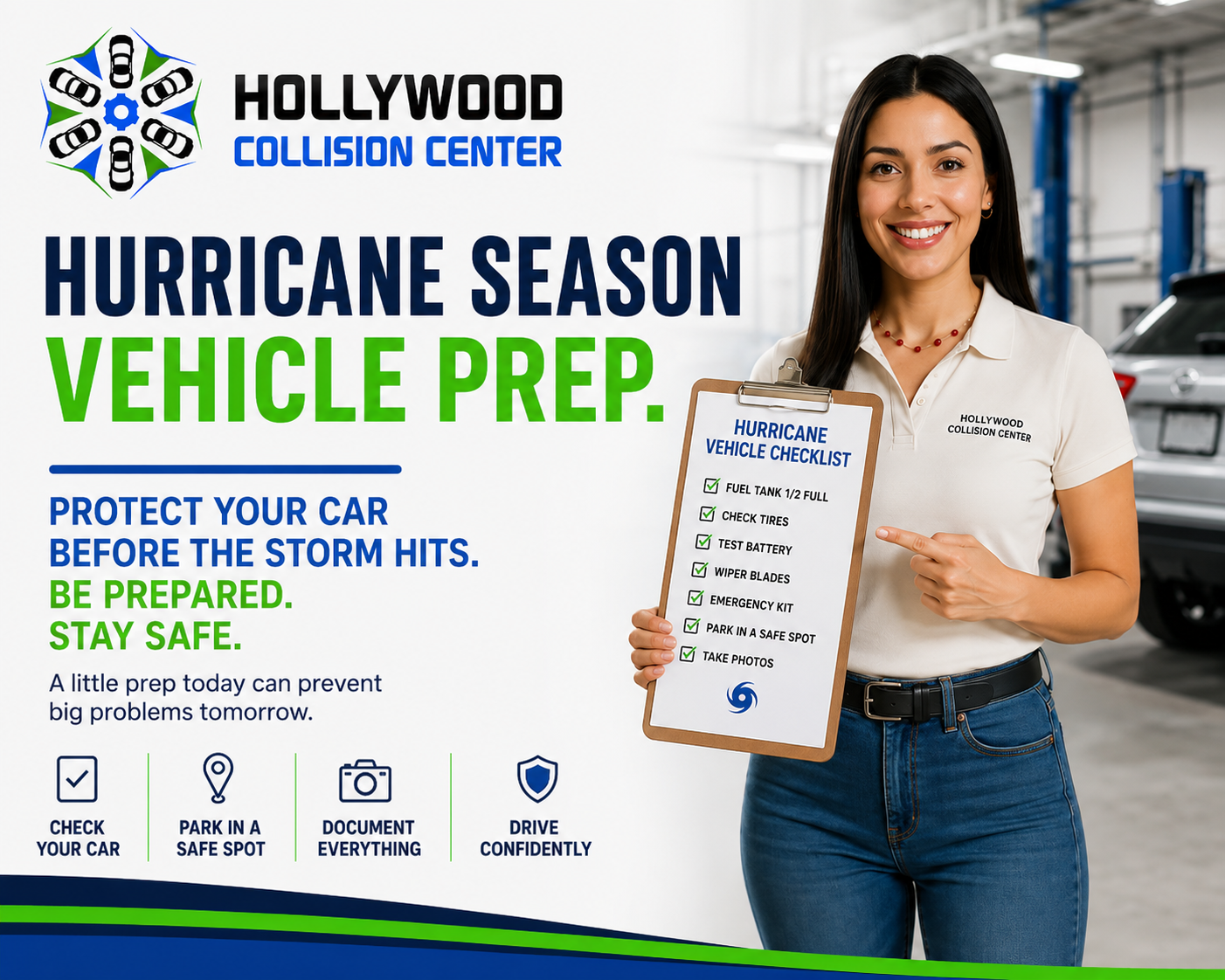
Keep Your Gas Tank at Least Half Full
Maintain at least half a tank of gas throughout hurricane season. When a storm begins approaching South Florida, fill up as early as possible.
Gas stations may experience long lines, fuel shortages, delivery delays, or power outages before and after a hurricane. Having enough fuel also gives you more flexibility if evacuation traffic causes lengthy delays.
Inspect Your Tires and Spare Tire
Check the tire pressure and tread depth on all four tires, along with the condition of your spare.
Worn or underinflated tires can reduce traction during heavy rain and increase the risk of hydroplaning. You should also confirm that your jack, lug wrench, and wheel-lock key are inside the vehicle.
Test Your Battery
Florida’s heat can shorten the life of a car battery. If your battery is more than three years old, slow to start, or showing corrosion around the terminals, have it tested before peak hurricane activity.
A weak battery could leave you stranded during an evacuation or fail after your vehicle has been sitting through a storm.
Check Your Windshield Wipers and Lights
Replace wiper blades that streak, skip, or fail to clear your windshield properly. Visibility can decrease quickly during tropical downpours.
You should also check your:
Headlights Brake lights Turn signals Hazard lights Interior lights
Working lights are especially important during heavy rain, dark road conditions, and widespread power outages.
Pack a Vehicle Emergency Kit
Keep a basic emergency kit in your vehicle throughout hurricane season. Recommended items include:
Flashlight and extra batteries Portable phone charger Bottled water Nonperishable snacks First-aid supplies Jumper cables or a portable jump starter Tire inflator Rain poncho Reflective vest or warning triangles Paper map Necessary medications Copies of your driver’s license, registration, and insurance information
Place important documents in a waterproof pouch or sealed plastic bag.
Photograph Your Vehicle Before the Storm
Take clear, dated photos or video of your vehicle’s exterior and interior before severe weather arrives.
Document all four sides of the vehicle, the roof, wheels, windows, windshield, interior condition, current mileage, and any existing scratches or dents.
These images may help establish your vehicle’s pre-storm condition if you need to file an insurance claim later.
Where Should You Park Your Car During a Hurricane?
If you cannot evacuate with your vehicle, where you park can significantly affect the amount of damage it sustains.
Park Inside a Garage When Possible
An enclosed garage generally provides the best protection from wind, rain, branches, and flying debris. Make sure the garage door is securely closed and remove loose objects that could strike the vehicle.
Avoid parking directly against the garage door in case strong winds cause it to bend inward.
Choose a Covered Structure
A sturdy covered parking structure may provide some protection when a private garage is unavailable. Select a location away from open edges, large glass panels, unsecured objects, and construction materials.
Stay Away From Trees and Power Lines
Do not park beneath large trees, weak branches, utility poles, power lines, signs, or structures that could release debris.
Even healthy-looking trees can lose large branches during hurricane-force winds.
Avoid Low-Lying and Flood-Prone Areas
Never leave your vehicle in an area known to collect water. Avoid parking:
Near canals or drainage areas In underground garages On low-lying streets Near flood-prone intersections In coastal areas vulnerable to storm surge Anywhere with a history of flash flooding
Whenever possible, move your vehicle to higher ground before heavy rain begins.
Flooding can occur throughout South Florida, including communities located away from the coastline.
What to Do If Your Vehicle Is Damaged by Wind or Debris
Flying objects, fallen branches, damaged signs, and downed power lines can cause dents, broken glass, paint damage, and hidden structural problems.
After the storm:
Make sure the surrounding area is safe before approaching the vehicle. Stay away from standing water and downed power lines. Photograph the damage before moving or cleaning the vehicle. Do not drive if you suspect damage to the windshield, tires, suspension, lights, frame, or safety systems. Contact your insurance company to begin the claims process. Arrange for a professional inspection by a qualified collision repair facility.
Damage that appears cosmetic may affect sensors, brackets, wiring, mounting points, or safety equipment located beneath the damaged panel.
You also have the right to choose the collision repair facility that works on your vehicle. You are not required to use the repair shop suggested by an insurance company.
What to Do If Your Vehicle Is Flooded
Flood damage is one of the most serious risks vehicles face during hurricane season. Modern cars contain computers, electrical modules, wiring, sensors, and safety systems that can be damaged by water.
Never Start a Flooded Vehicle
Do not turn the key, press the start button, or attempt to jump-start a vehicle that has been submerged or exposed to deep floodwater.
Starting the vehicle may draw water farther into the engine, fuel system, electrical components, or other mechanical systems. This can make the damage more severe and may reduce the possibility of a successful repair.
Have the vehicle towed to a qualified repair facility for a complete inspection.
Warning Signs of Flood Damage
Flood damage is not always immediately visible. Common warning signs include:
A damp or musty odor inside the cabin Wet carpeting, seats, or padding Water lines on the upholstery, doors, or dashboard Fog or moisture inside the headlights or taillights Malfunctioning windows, locks, lights, or dashboard controls Warning lights that were not present before the storm Silt, sand, mud, or debris beneath seats or inside air vents Water inside the trunk or spare-tire compartment
Even when the interior appears dry, moisture may remain beneath carpeting, behind trim panels, inside insulation, or within electrical connectors.
Can a Flood-Damaged Car Be Repaired?
Whether a flood-damaged vehicle can be repaired depends on several factors, including:
How high the water reached How long the vehicle remained exposed Whether the water was fresh, salty, or contaminated Whether the engine was started afterward Which electrical and safety systems were affected The vehicle’s age, condition, and value
Do not assume the vehicle is automatically repairable or automatically a total loss. A proper inspection and diagnostic evaluation are needed to determine the full extent of the damage.
Hurricane and Flood-Damaged Car Repair in Hollywood, Florida
Hollywood Collision Center provides professional inspections and collision repair services for vehicles damaged by hurricanes, tropical storms, wind, debris, and flooding.
Our team can assist with:
Flood-damage inspections Vehicle diagnostics Interior drying and restoration Dent and body panel repair Auto painting and refinishing Structural and frame repairs Glass and exterior damage Insurance claim assistance Safety-system evaluations Certified collision repair
We also work directly with insurance companies throughout the claims and repair process, helping South Florida drivers better understand their repair options.
Do Not Assume the Worst Before Your Car Is Inspected
Hurricane damage can be stressful, especially when your vehicle is essential for work, family responsibilities, and everyday transportation. However, visible damage does not always reveal the full condition of the vehicle.
A professional inspection can identify hidden problems, determine whether the vehicle is safe to drive, and explain the repair options available.
Hollywood Collision Center proudly serves drivers throughout Hollywood, Fort Lauderdale, Pembroke Pines, Miramar, Davie, Hallandale Beach, Cooper City, and surrounding Broward County communities.
Need Hurricane, Flood, or Collision Repair?
If your vehicle has been damaged by flooding, strong winds, fallen branches, or storm debris, do not start or drive it until it has been properly evaluated.
Schedule an appointment with Hollywood Collision Center today.